The atelier
A Tailoring House for Textile Couture
La Couverta is a tailoring house for textile couture in Hamburg — led by a directrice, sewn by a small number of experienced hands. The atelier makes slipcovers, table linen, cushions and textile appointments for houses, tables and yachts — by hand, to measure, fitted in calico on the original. For curtain installation and upholstery work the atelier cooperates with long-standing partner workshops.
The directrice
A face is optional — hands are enough
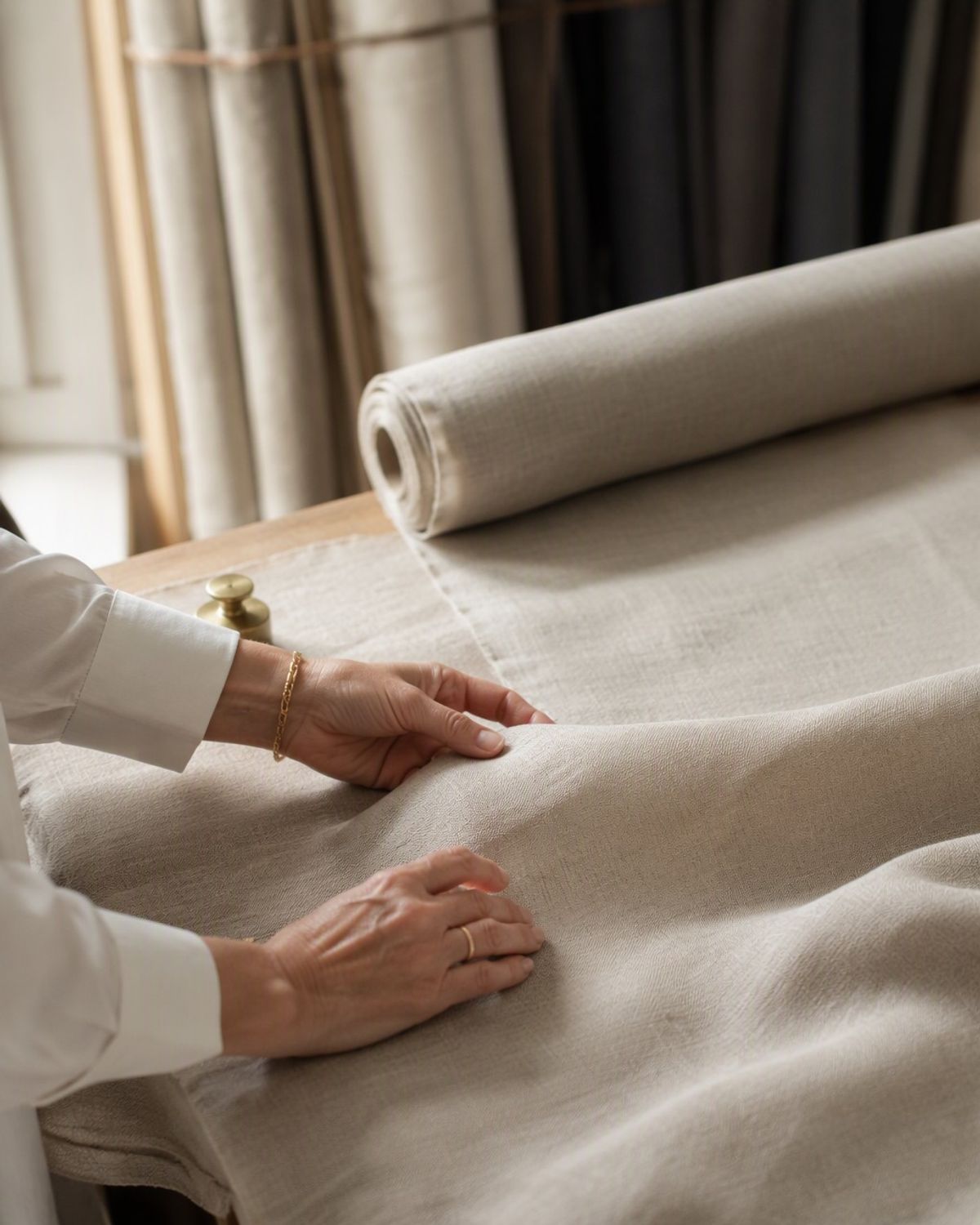
Anna Bernd is the directrice of the atelier. {{GRUENDERIN_BIO}}
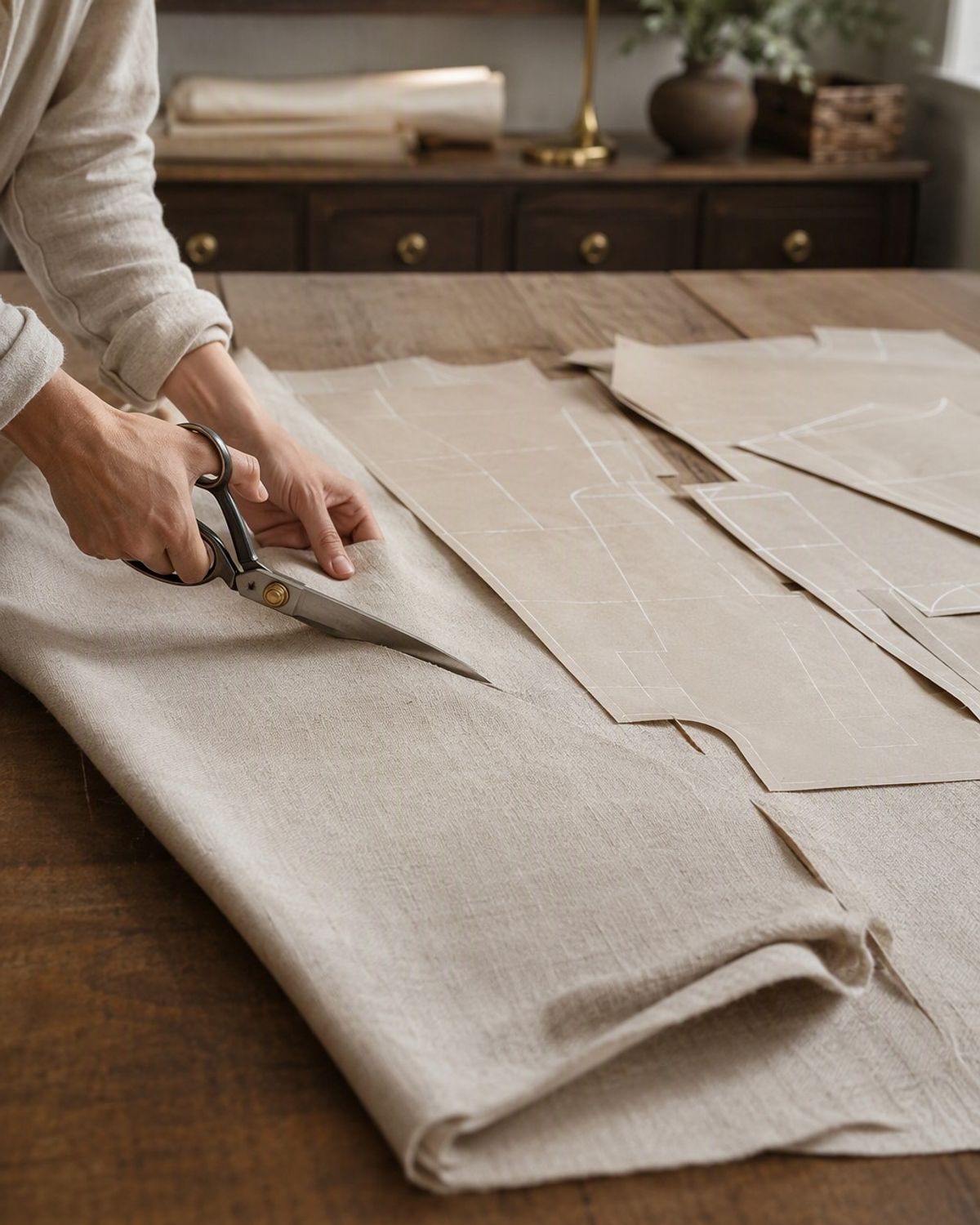
You will not find a portrait photograph on this page — at the directrice’s wish. What matters is what the hands can do: measuring on the original, the drape of a floor-length cover, the seam that still stands after twenty years.
The name
What La Couverta means
Couvert is the place setting — plate, knife, glass. It is the covered thing itself, from the French couvrir: to cover, to dress, to protect. And in Switzerland a couvert is the envelope in which something important travels.
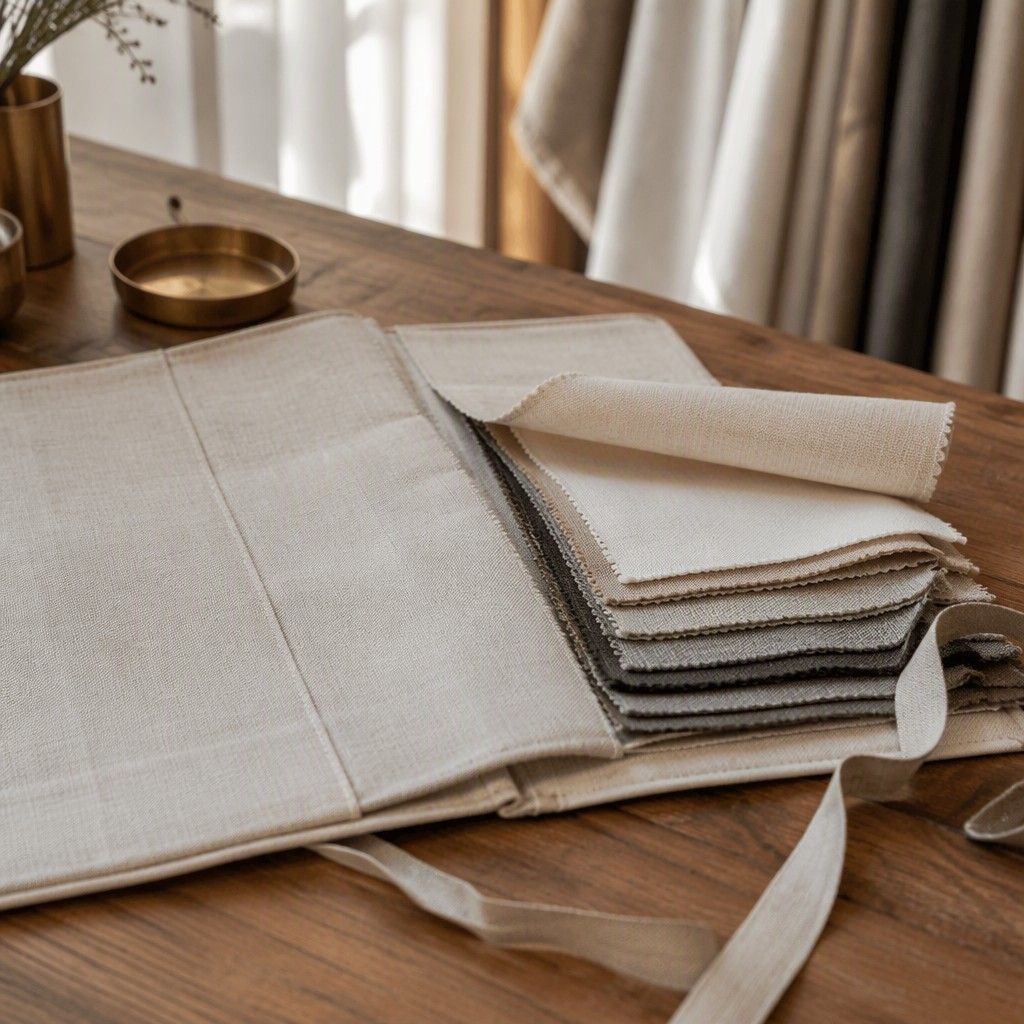
From couvert comes La Couverta — the covered one in the feminine form: a tailoring house that dresses tables, furniture and rooms. The atelier carries all three meanings in its work, the third quite literally: fabric samples and quotations from La Couverta arrive in a hand-sewn linen couvert — no catalogue, no cardboard box.
The rituals
What belongs to every piece
Six rituals accompany every commission in the atelier — from the first sample to a reorder years later.
Le Couvert. Fabric samples and quotations travel in a hand-sewn linen envelope. You judge the cloth at your own table, in your own light — not under showroom lamps.
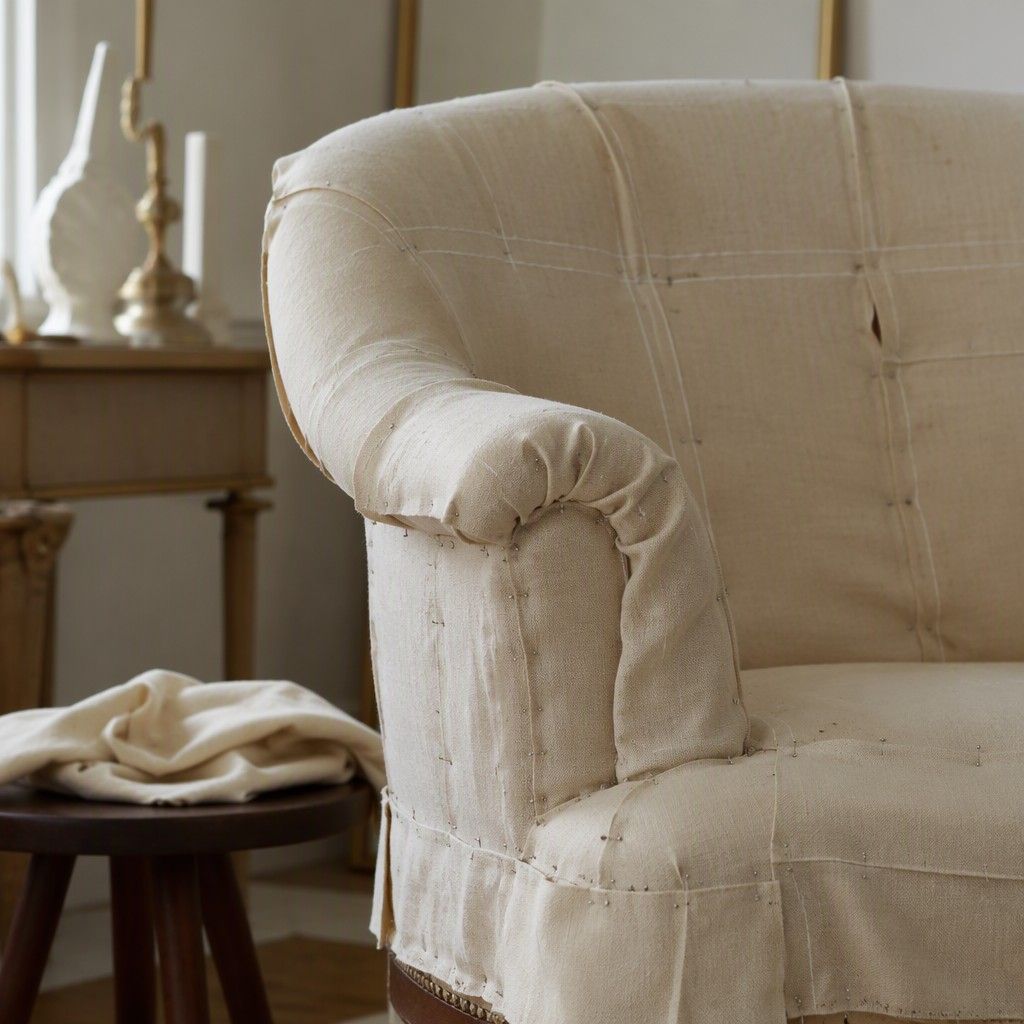
The calico fitting on the original. Before the fabric is cut, a mock-up in unbleached calico is drawn onto the original and fitted — on the chair, the table, the berth. Only when the calico sits does the first cut touch the cloth.
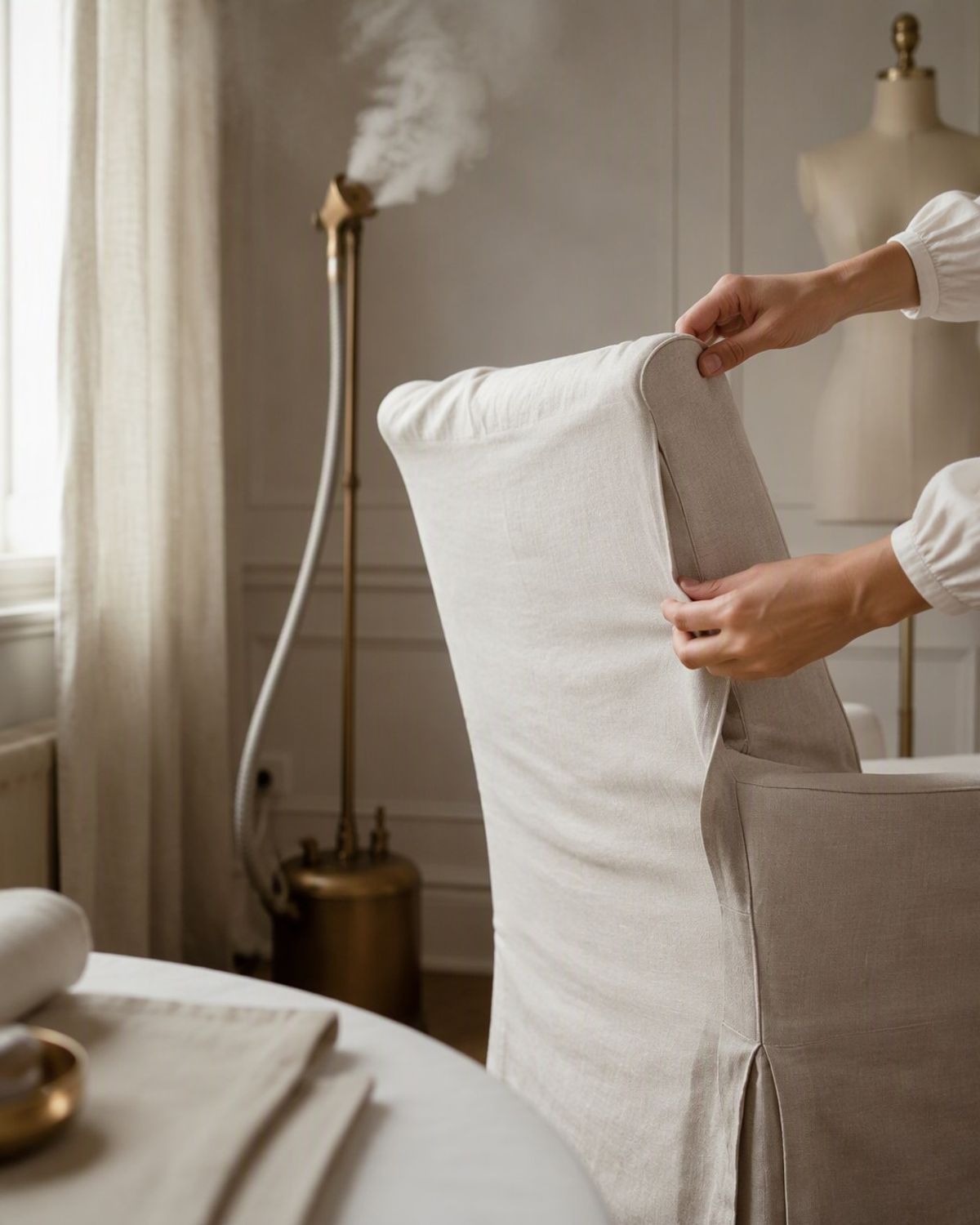
The final fitting. Every piece is delivered in person, drawn on and steamed — in the house, at the table, on board. The atelier leaves only when everything sits.
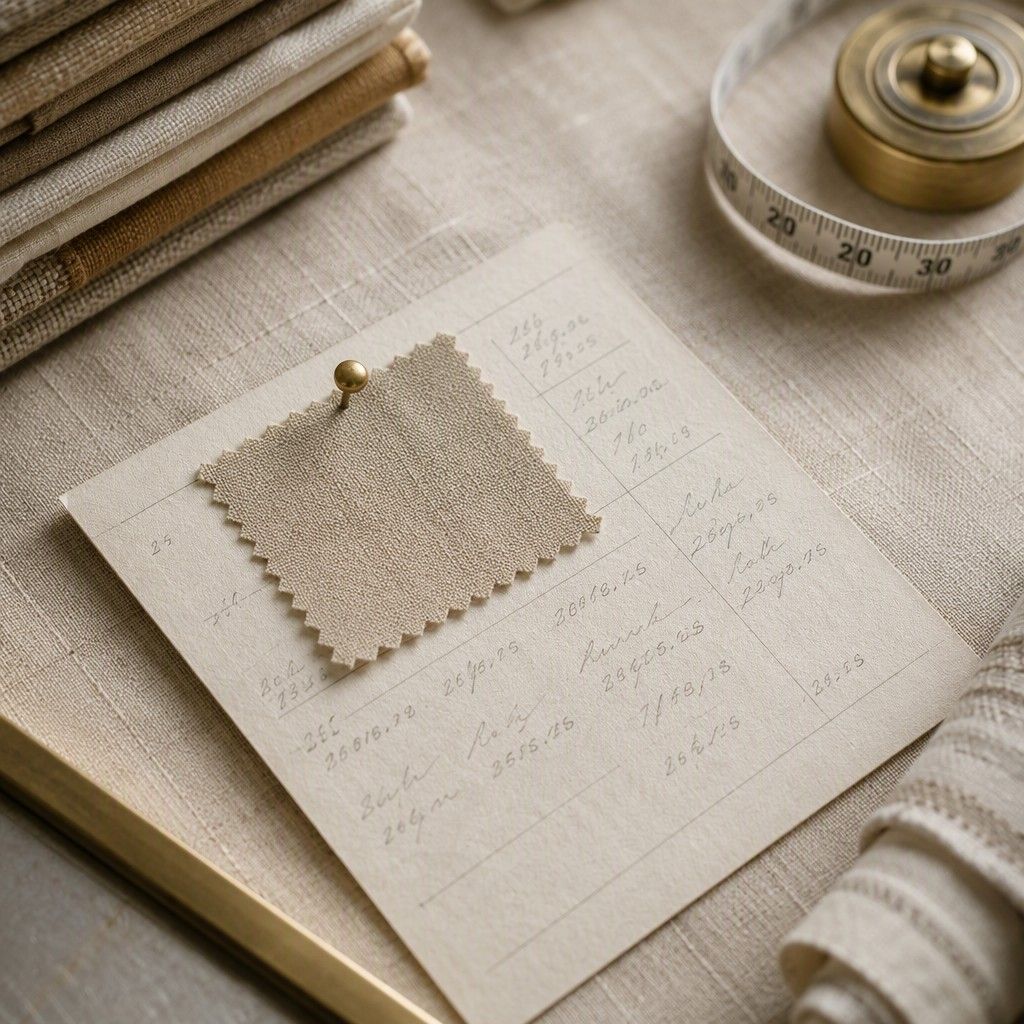
The textile passport. A record card accompanies every piece: cloth, origin, measurements, care — kept for decades, so that the next generation knows what it holds.
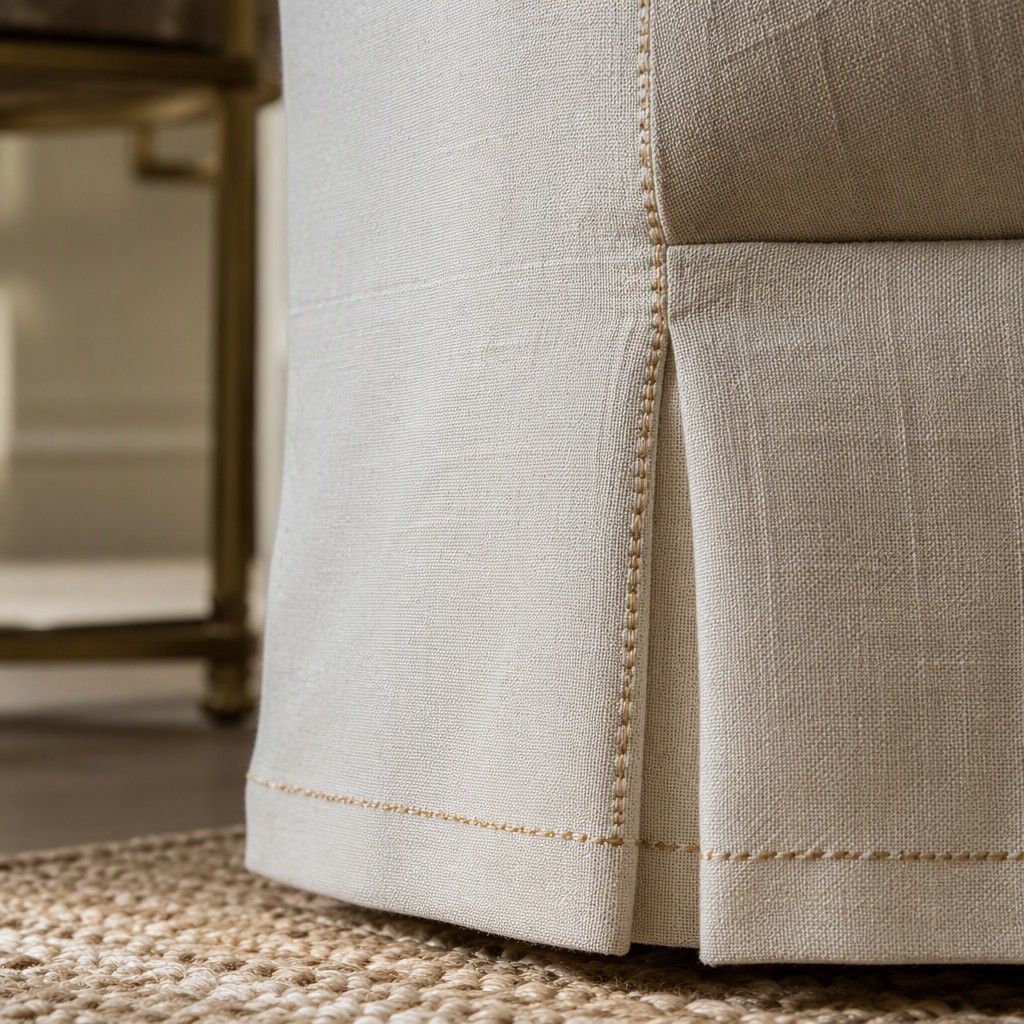
The signature seam in brass thread. A single seam in brass thread distinguishes every piece of the atelier — placed where only those will find it who know where to look.
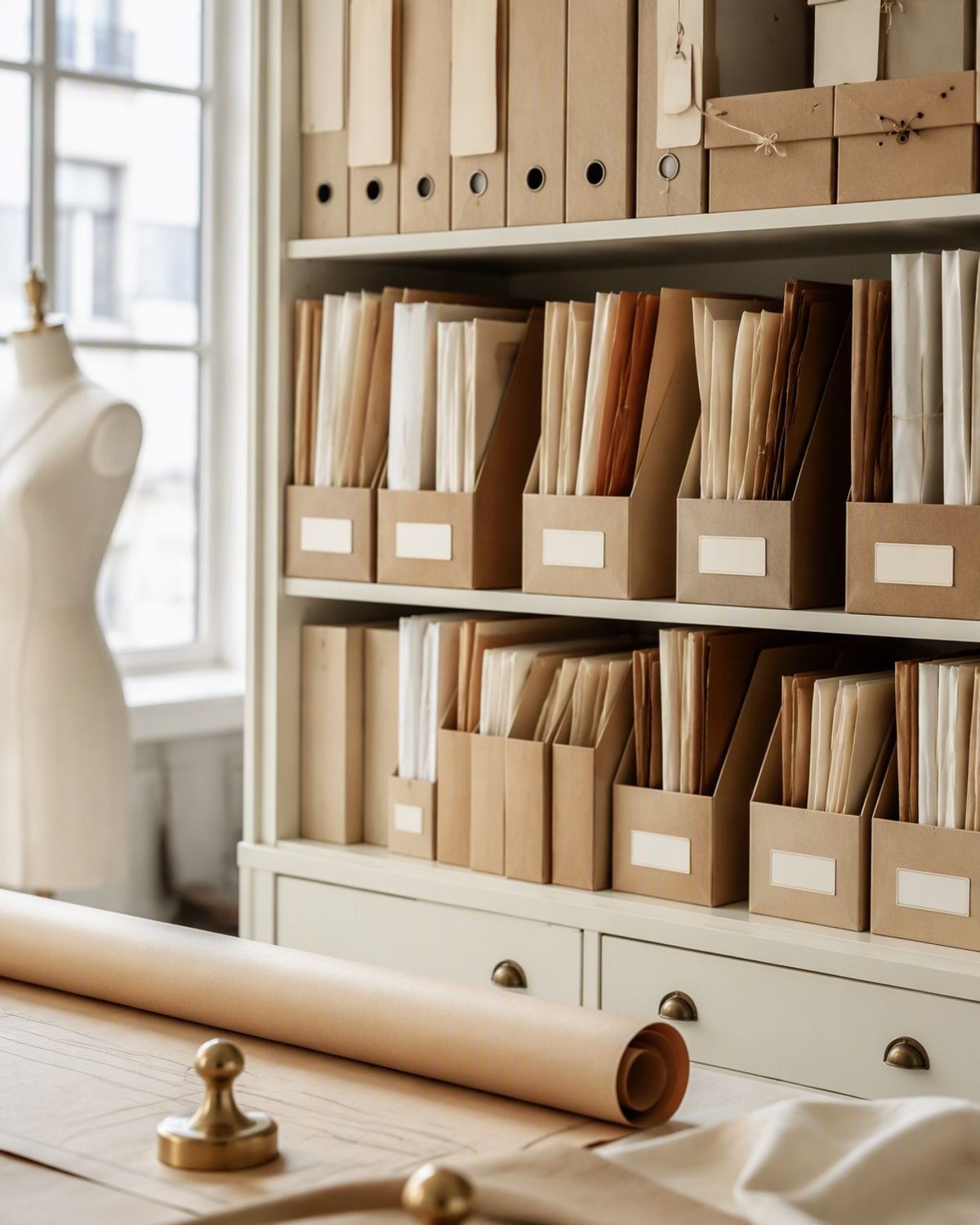
The pattern archive. Every pattern stays archived. A second set, a replacement cover, the addition for the next celebration — none of it needs a new appointment, because your measurements rest with us.
The values
Five words we ask to be measured by
- Discretion. We name no names, no addresses, no ships. References only anonymised, photographs only with explicit permission.
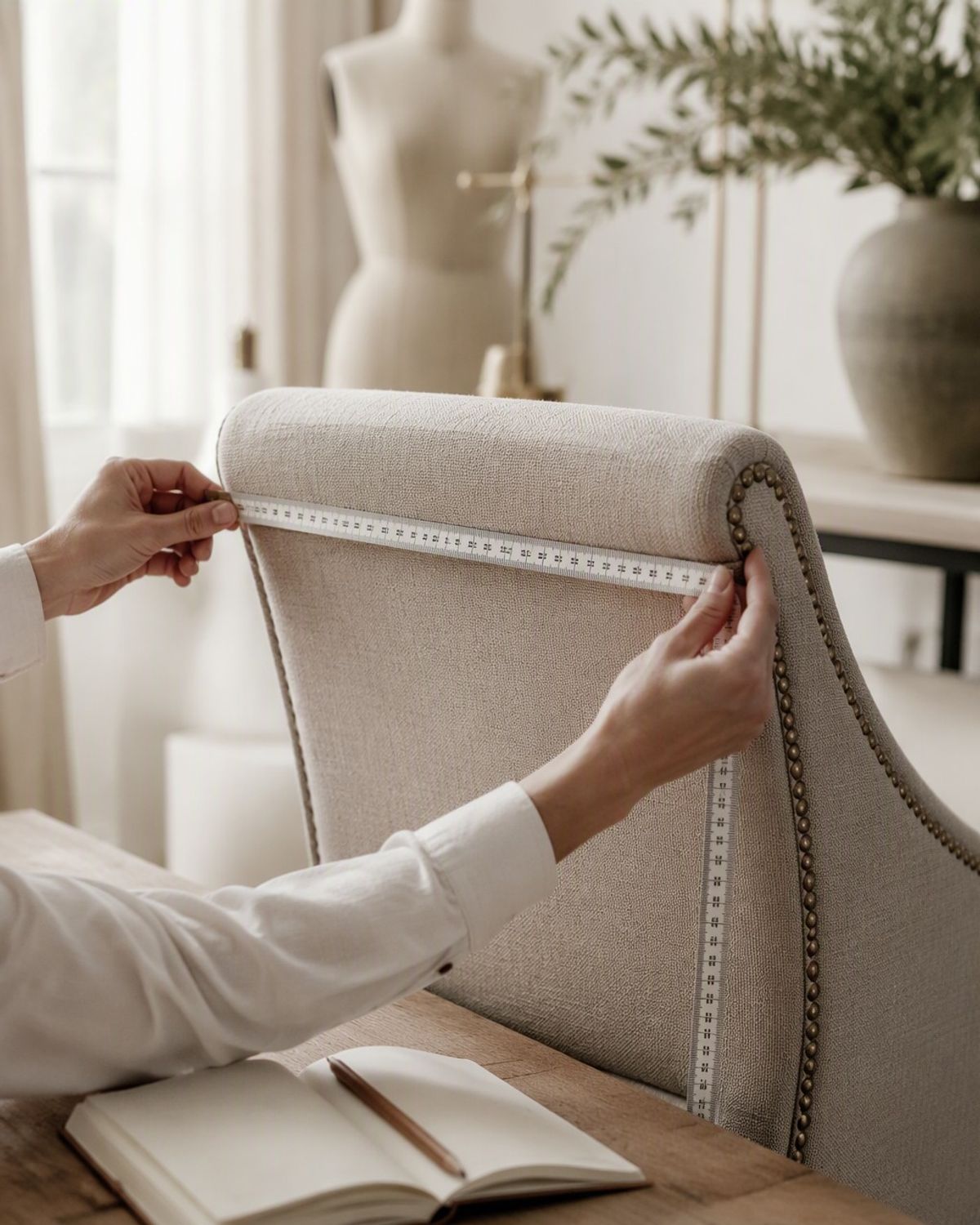
- Measure. Every piece begins at the original, with folding rule and calico — not with a chart.
- Honesty of materials. We state the origin, weave and care of every cloth and recommend no fabric that fails its task.
- Calm. No pressure, no unnecessary deadlines. A first conversation is a conversation, not a sales call.
- Endurance. We make for decades and remain reachable for as long as the piece lives — for repair, replacement and reorder.
Endurance has another side: the pieces that were there before us. Inherited linen, family lace and old embroideries we rework or restore — napkins from the table linen of the grandparents, a christening cushion from the lace of the family. What is possible in detail is described on the page Monogram and crests.
Partner workshops
Together with our partner workshops

A tailoring house cannot do everything — and should not. Setting curtain tracks, hanging curtains and true upholstery work are carried out together with our partner workshops: master craftsmen in Hamburg and the region with whom the atelier has worked for years.
For you it remains one path: measuring, planning and acceptance run through the atelier; the work on site is done by the hands trained for it.
Questions and answers
Frequently asked questions
Can I visit the atelier?
With pleasure, by appointment. A visit is also the calmest form of first conversation: you see cloth, seams and work in progress, and we discuss your project at the large cutting table.
Who makes the pieces?
Everything is made in the Hamburg atelier, by hand and by a small number of experienced hands. Foam cores, curtain installation and upholstery work are carried out together with our partner workshops — master craftsmen we have worked with for years.
What does a bespoke commission cost?
Every piece is priced according to fabric and workmanship. After the first conversation you receive a fixed quote.
What does the name La Couverta mean?
Couvert is the place setting on a table and the covered thing itself — the French verb couvrir means to cover. La Couverta is the covered one, in the feminine form: the house dresses tables, furniture and rooms. In Switzerland a couvert is also an envelope — our fabric samples and quotations travel in a hand-sewn linen couvert.
Does the atelier work outside Hamburg?
Yes. La Couverta works in Hamburg, on Sylt and throughout northern Germany — and on request across Europe and on board. Measuring, calico fitting and final fitting take place wherever your piece stands.