Fabrics for slipcovers — linen, velvet or silk compared
The starting point
Three families, one chair
In a slipcover the choice of fabric decides more than the cut: it determines how the cover falls, how it feels, how it takes the light and how often you will wash it. Three families cover almost everything a house needs — linen, velvet and silk. They are not rungs of a ladder but answers to three different rooms.
At La Couverta the choice is never made from a catalogue but on the original: first the toile fitting on the chair, then the fabric. What each of the three families can do follows here in turn.
Linen
The cloth for every day
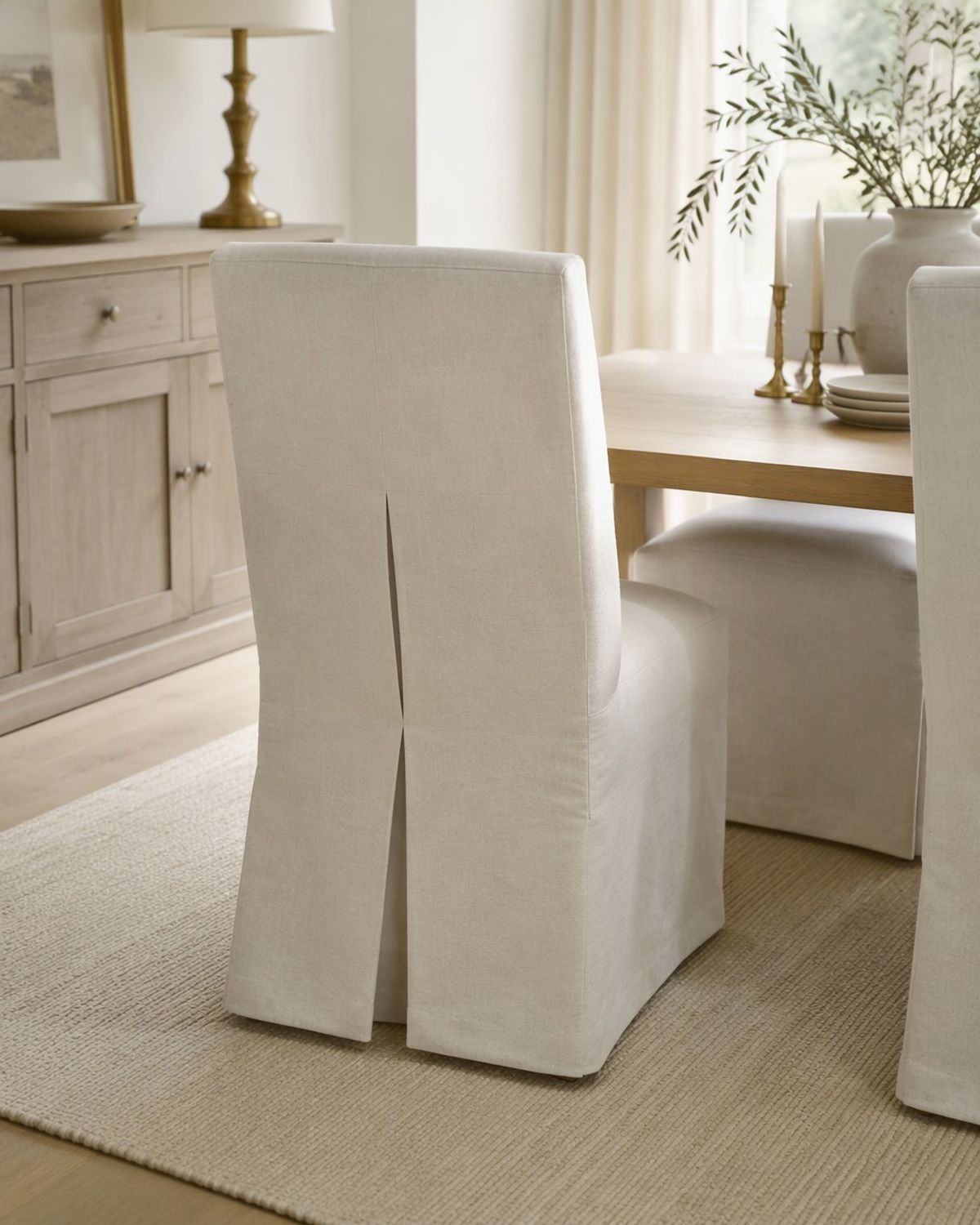
Linen slipcovers are the working foundation of the house. The flax fibre is strong, kind to moisture and withstands a boil wash; pre-washed linen holds its measurements and softens with every wash. The handle is dry and firm, the drape stands rather than flows — this gives the cover a clear, calm edge.
The Martindale value of a good slipcover linen lies far above what a dining chair will ever demand. Undyed natural tones also bring a high lightfastness. Linen creases — and precisely this living crease is intended. For the kitchen table, the breakfast corner, the summer house and every chair that is used daily and washed often, linen is the first choice.
Velvet
The cloth for the light
Velvet slipcovers change a room more than any other choice. The pile — dense and soft in cotton velvet, more flowing in viscose velvet — takes the light in a directed way: depending on the angle, the same cover appears deeper or lighter. This life within the colour makes velvet the cloth for the dining room, for chairs that stand in candlelight in the evening.
The drape is heavy and closed; inverted pleats and floor-length forms are carried by velvet with particular calm. In care it is more demanding than linen: it is not washed but cleaned, and seat edges polish lightly over the years — a patina that belongs to velvet as the crease belongs to linen. The Martindale value of a good cotton velvet lies in ranges that serve daily use well.
Silk
The cloth for the occasion
Silk is the third family — and the rarest on a chair. The handle is cool and smooth, the lustre pearly rather than mirror-bright, the drape flowing like no other cloth. It suits rooms that are used rarely and then ceremonially: the chair at the dressing table, the salon armchair, the cover that is drawn on only for particular occasions.
Its limits are equally clear. Silk is sensitive to light — its lightfastness lies markedly below that of linen — it tolerates neither wetness nor mechanical strain. Those who seek the lustre with more everyday suitability find a workable middle way in blends of silk with wool or linen. Pure silk remains a deliberate decision for the special place.
The decision
Choosing on the original
Handle, drape and behaviour in light cannot be judged on a screen. That is why the decision at La Couverta always follows the same ritual: fabric samples in a hand-sewn Le Couvert to your home, then the toile fitting on the original — a mock-up in unbleached cotton, pinned on your chair, in your light. Only when the form sits is the fabric chosen and cut.
The order is deliberate: a cut that sits in linen also sits in velvet — the reverse is not always true, because velvet falls more heavily. The forms and details of the finished cover are described on the page Bespoke slipcovers, the origins and weaves of the cloths on the page Materials. The lead time is usually six to ten weeks.