What determines the price of a made-to-measure slipcover
The question
An honest answer without a number
“What does a made-to-measure slipcover cost?” is the question that accompanies almost every enquiry — and it has no general answer. Not out of evasion, but because the price arises from the piece itself: from the fabric, the cut, the details and the work your furniture demands. A number without these factors would not be information but a guess in the dark.
What can be answered in general is the other question: what the price depends on. This article lays open the factors from which the quotation of La Couverta is composed — and describes the procedure by which you receive your fixed price before a metre of fabric is ordered.
The fabric
The material is the largest factor
Between a plain linen and a heavy velvet the material differs by a factor of about five — and both have their justification. The linen for the kitchen cover in daily use is a different cloth from the velvet for the armchair in the drawing room; the choice follows the use, not the rank. What a fabric must be able to bear is recorded in values such as the Martindale and the lightfastness, which La Couverta sets down in the Textile Passport for every piece.
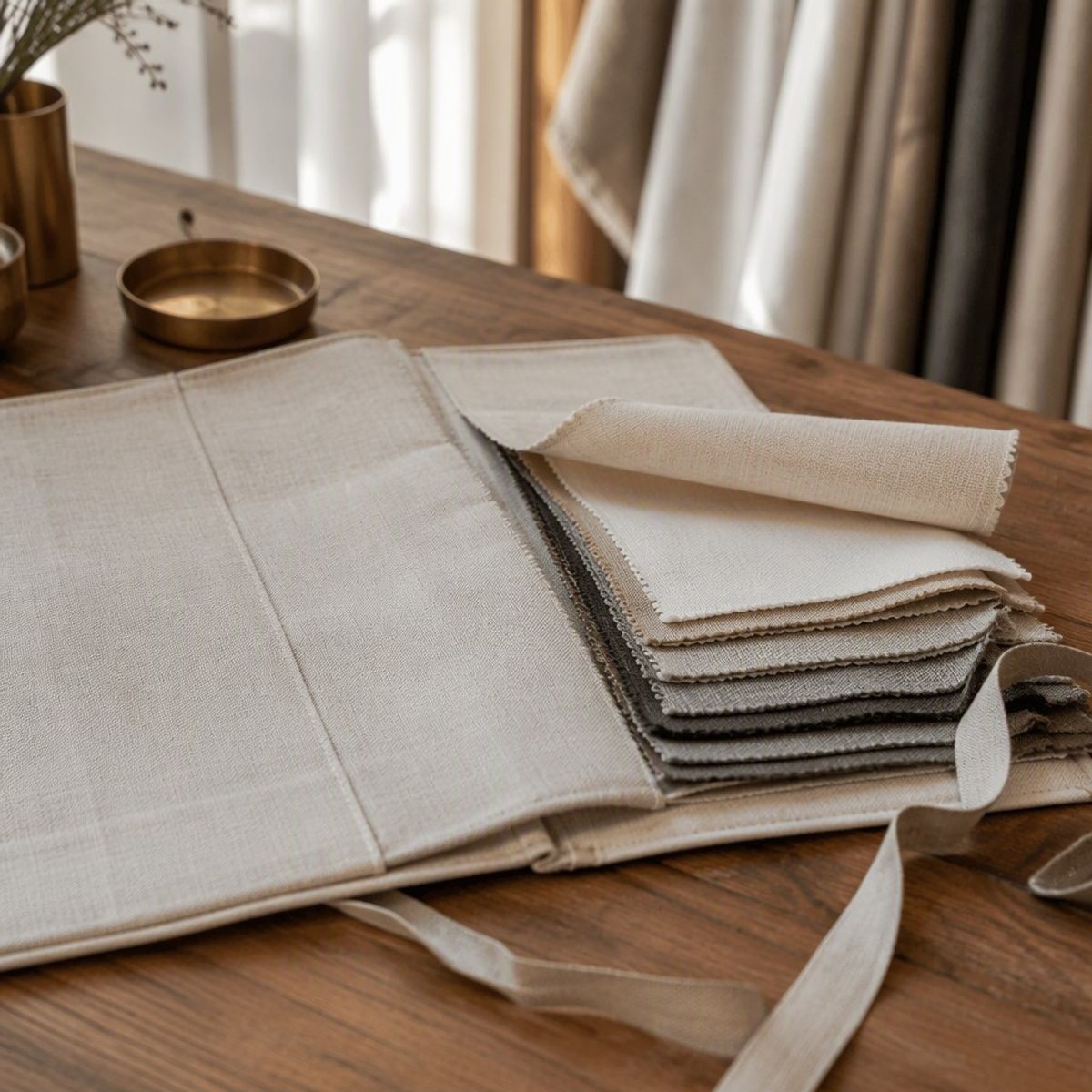
You make the fabric choice on the sample, not on the catalogue. On request we send fabric samples in a hand-sewn Le Couvert of linen, so that you can judge handle and colour in your own light. Which weaves we carry and where they come from is described on the page Materials and origins.
The repeat
Why patterns need more fabric
A plain, unpatterned cloth can be cut economically; the lengths follow one another without regard to their position in the design. It is different with patterned fabrics: here every length must be placed so that the pattern continues coherently across seat, back and reverse. This matching — the pattern repeat — costs extra consumption, which can be considerable depending on the height of the repeat.
This is not wasted fabric but the difference between a cover with a pattern and a cover on which the pattern is right. Those who want to keep the consumption small choose a plain cloth or a small, tight pattern; those who love a large design buy its repeat along — and see it every day.
The details
Lining, pleats, buttons
The second group of price factors lies in the handwork. A lined cover needs twice the cutting and calmer seams. An inverted pleat at the back gives the drape depth and costs fabric and pinning work. A piping traces every edge; a button placket with hand-worked buttonholes turns the reverse into a detail. An embroidered monogram, finally, is a work of its own, made to a drawn design and a chosen thread.
None of these details is necessary — and each is visible. The plain cover without additions is, with a good cut, not a renunciation but an attitude. The details are the honest adjusting screws with which the piece approaches the occasion and the frame.
The work
Toile fitting, quantity, furniture
Every cover from La Couverta is pinned and fitted on the original as a toile fitting. This appointment is part of the price and the reason the result sits: the toile cover catches everything no tape measure records — the sat-in middle, the slanted back, the fall of the corners. To forgo it means saving exactly the part of bespoke tailoring that carries its name.
The quantity works in your favour: a single cover carries the journey, the pattern and the fitting alone; in a set of several chairs these shares are distributed, and every further chair becomes simpler. And finally the furniture itself counts — a straight chair is a different work from a curved armchair with fitted arms.
The procedure
A fixed price before fabric is ordered
This is how it works at La Couverta: in the first conversation we clarify the furniture, the use and your wishes; you receive fabric samples in the couvert and choose at leisure. On this basis we prepare a quotation with a fixed price — fabric, pattern, toile fitting, making and final fitting on site are included and itemised in it. Only when you hold the couvert with this quotation in your hands and agree is the fabric ordered.
There are no surprises afterwards: no later claims, no items that appear only at the acceptance. What the path from the first conversation to the finished cover looks like in detail is described on the page The process. If you would like to ask your question together with your furniture, the enquiry is the right beginning — it commits you to nothing but an honest conversation.