The house — acoustic curtains
Acoustic Curtains Made to Measure
La Couverta makes bespoke acoustic curtains in Hamburg — multi-layered from heavy velvet, molton and wool weaves, with a deep wave fall that takes the reverberation and improves speech intelligibility in the room. We measure every room in person; the installation of the tracks is carried out together with our partner workshops. Lead time is usually six to ten weeks.
The effect
What an acoustic curtain achieves
A room with a lot of glass, stone and smooth walls throws every sound back. Conversations echo, music loses its contour, and even a quiet dinner sounds strained. An acoustic curtain takes this reverberation: the heavy, deeply pleated fabric absorbs the sound instead of mirroring it.
The result is not silence, but order. Voices become more intelligible, the room feels smaller in the good sense, and long evenings at the table become less tiring.
We are honest about the boundary: a curtain dampens, it does not insulate. Against structural noise — traffic, aircraft, the stairwell — no fabric in the world helps, only building measures. What we change is the sound within your four walls.
Fabrics and construction
Mass, layers, wave fall
The effect of an acoustic curtain comes from three things: the weight of the fabric, the number of layers and the depth of the pleats.
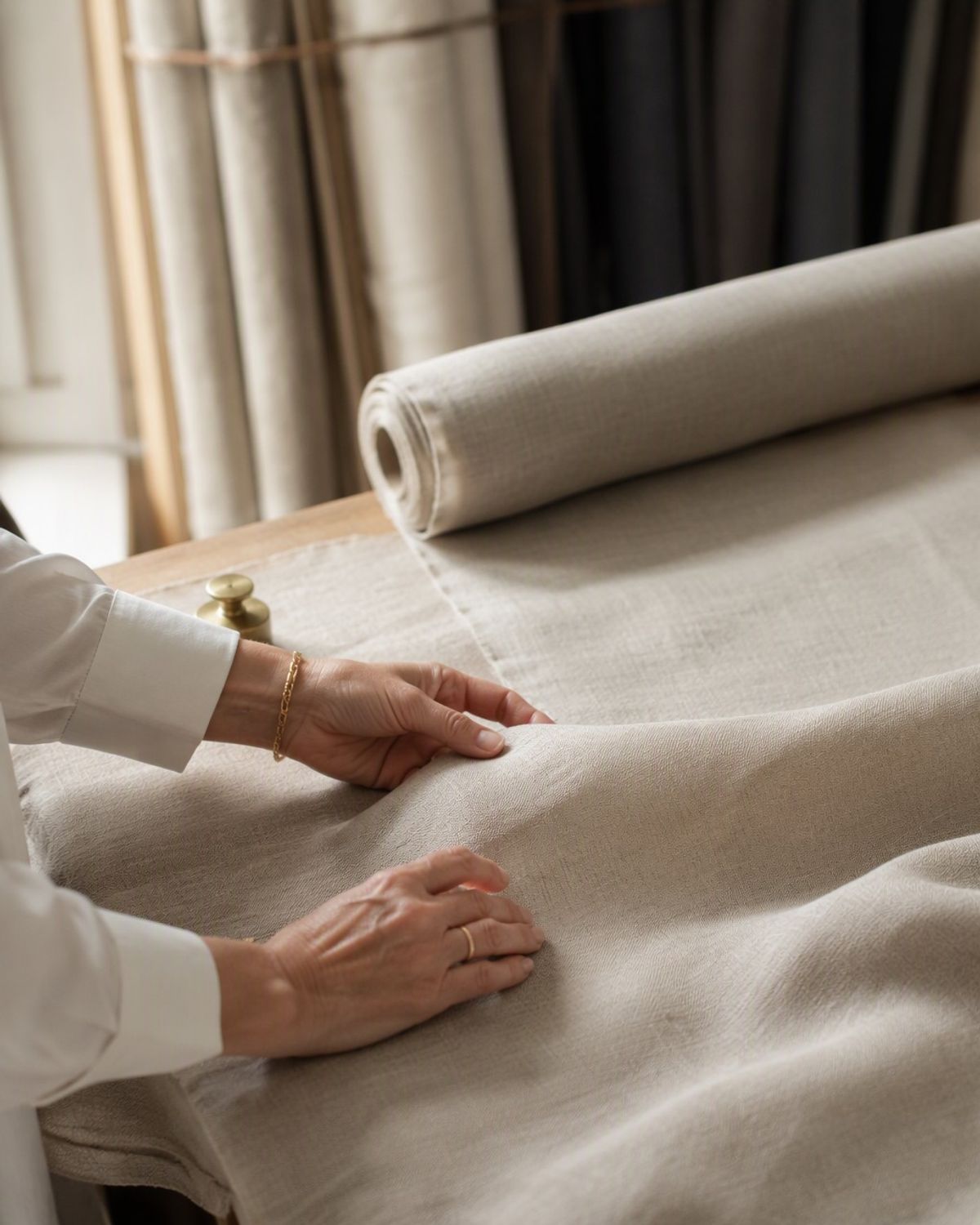
Heavy velvet is the classic acoustic fabric: densely woven, with a pile that breaks the sound. Molton — the dense, brushed cotton fabric of the stage — we lay in as a middle layer when the damping should reach especially deep; the term molton is explained in our glossary. Wool weaves and heavy linen double-faces offer a lighter, drier alternative to velvet.
Sewn multi-layered and hung with a generous wave fall, the effective amount of fabric doubles compared with a flat panel. What we mean by fall is described by the term curtain fall.

We describe the origin and properties of all fabrics on the Materials page.
Places of use
Where acoustic curtains work
Living rooms with a lot of glass. Large window fronts are beautiful and acoustically unforgiving. A floor-length curtain in front of the glass takes the hardest reflector out of the room — while remaining an entirely normal, beautiful bespoke curtain.
Restaurants and practices. Where many voices speak at once, the reverberation decides whether people understand each other. Curtains as movable room dividers order the sound without changing the floor plan.
Home cinema and music room. Here the question of light joins the reverberation: the heavy, lined curtain darkens and dampens in one. How we sew darkening with a molton lining is described on the Curtains page.
On site
Measuring and installation
Acoustics begin with the measure. We look at the room in person: ceiling height, glass surfaces, flooring, the paths the sound takes. Only then do we set fabric, layers and pleat depth. Our glossary explains the term measuring.
We usually hang acoustic curtains close to the ceiling on tracks, so that the panel dresses the wall from floor to top and can slide fully aside when needed. Setting the tracks and the ceiling mounting are carried out together with our partner workshops — statics and fixing remain in checked hands, fabric and seam come from our atelier.
The full path from the first meeting through the toile fitting to the final fitting on site is described on the Process page.
Boundaries
What we do not promise
We are an atelier for textile couture, not acoustic engineers for buildings. We promise no standard values and no absorption grades from a catalogue. Fabrics behave differently in a room than in a test rig, and we find it more honest to say so.
What we do instead: we measure on site by ear and experience — with a clap of the hands, with the spoken word, with the knowledge from many similar rooms. On request we bring in an acoustician for the measurement; the making of the curtains stays in our atelier.
Your enquiry
Your room, our ear
Describe to us the room that is too loud: the surfaces, the use, what bothers you. We reply personally within one working day and arrange a first meeting — at the atelier in Hamburg or at your place.
The lead time after measuring and fabric decision is usually six to ten weeks.
Questions and answers
Frequently asked questions
Does an acoustic curtain also insulate against street noise?
No, and we say so openly: a curtain dampens the reverberation within the room, it does not insulate against structural noise from outside. Against noise that enters through windows or walls, only building measures help. What the curtain changes is the calm within the room itself — voices become clearer, sounds no longer hang in the void.
Which rooms benefit the most?
Rooms with hard surfaces and a lot of glass: large living rooms, galleries, restaurants, practices and home cinemas. Wherever conversations echo or music seems shapeless, a heavy, deeply pleated curtain brings the sound back into the room.
How is an acoustic curtain installed?
Usually on a track close to the ceiling, so that the panel dresses the wall surface completely. Measuring and planning are done by the atelier; setting the tracks and hanging the curtains are carried out together with our partner workshops.
What does a bespoke acoustic curtain cost?
Every piece is priced according to fabric, layers and workmanship; prices are available on request. You receive a fixed quote after the first meeting.
How long does it take to make?
After the measuring visit and your choice of fabric, the lead time is usually six to ten weeks. The exact date is stated in your quote.