The period building
Bespoke textile work for Vienna — period buildings, tall rooms, classic forms
La Couverta works for houses and apartments in Vienna — in Döbling, Grinzing, Hietzing and the Innere Stadt. We are particularly familiar with period buildings: curtains for tall windows, slipcovers for historic furniture, classic details such as the inverted pleat and the drawn-thread hem. Measuring and final fitting take place on site; lead time is usually six to ten weeks.
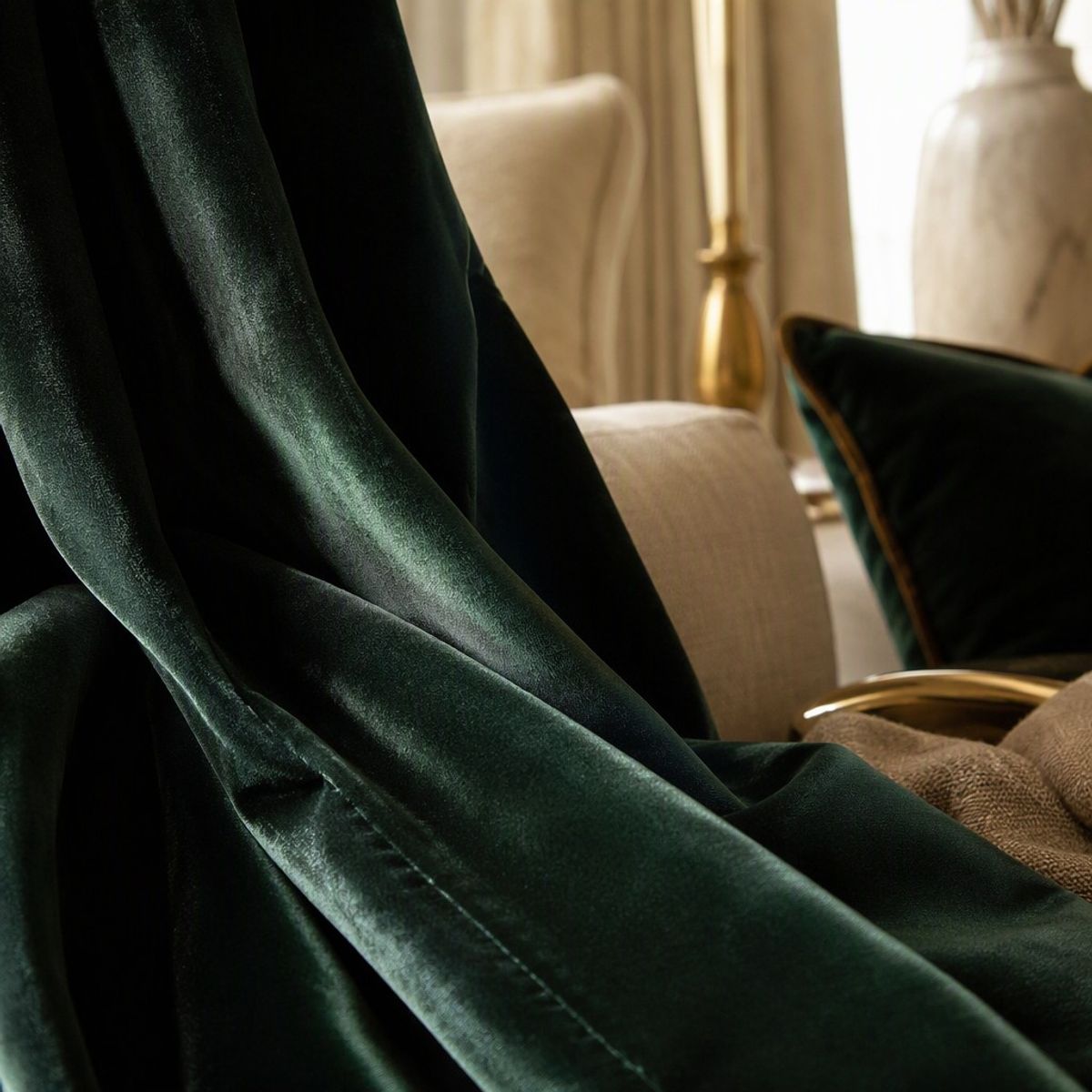
The period building
Tall rooms call for made to measure
Vienna builds upwards. Three and a half metres of ceiling height, casement windows, double doors — dimensions for which no off-the-shelf textiles exist. A curtain twenty centimetres too short turns a salon in Döbling into a makeshift.
We make bespoke curtains that follow the height of the room: measured at the window, run from the crown to the floor, with a fall that gives the fabric time. We work the same way for the furniture: covers for sofa and armchair drawn over the existing pieces without touching them.
Viennese apartments bring their own logic: narrow staircases, double doors that open into the room, tiled stoves that want to keep their place. We measure all of this in — a curtain ends where the stove begins, and a slipcover clears the way a door needs. Made to measure means here: the room sets the conditions, the fabric follows.
The forms
Inverted pleat, drawn-thread hem — the classic repertoire
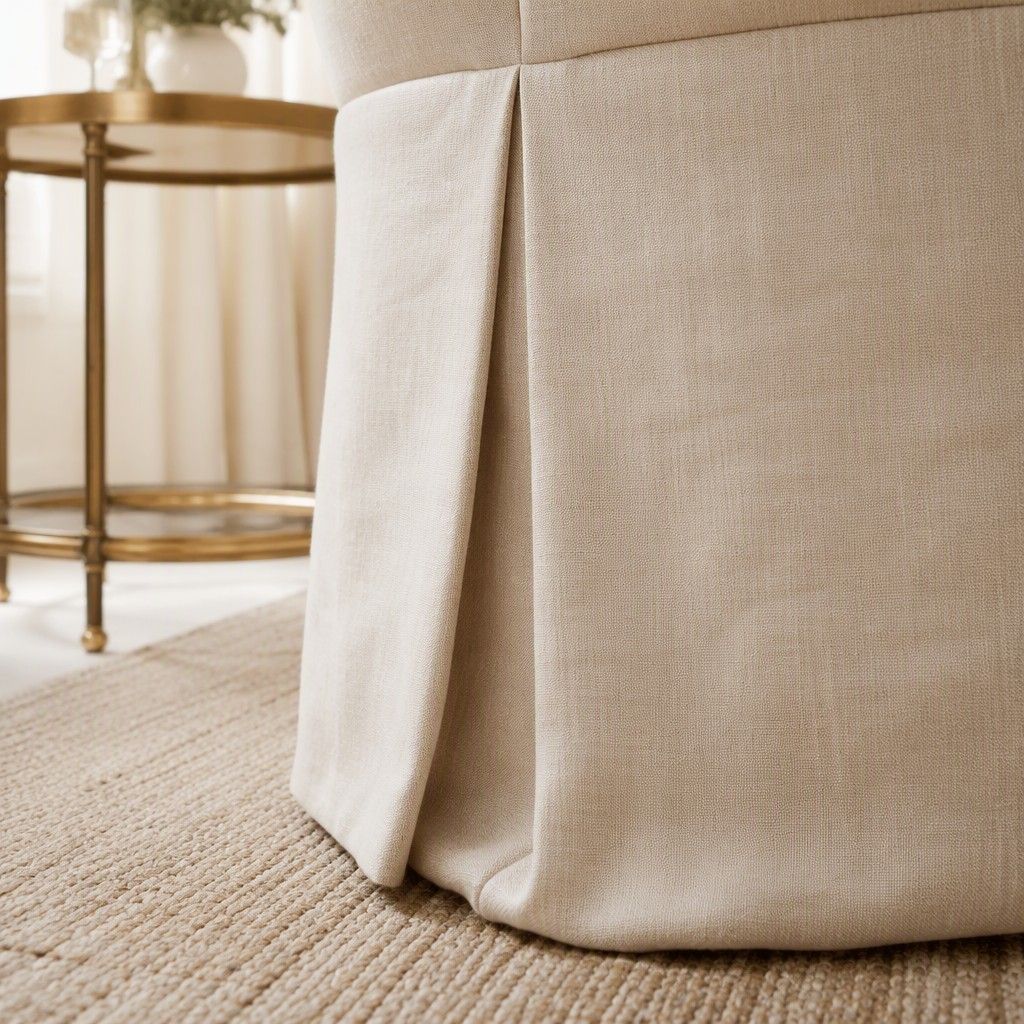
Some details belong in Vienna because they come from this world. The inverted pleat gives the floor-length slipcover its movement and stands in the rooms it was invented for. The drawn-thread hem adorns runners and cloths of the table linen — drawn threads instead of print, work by hand instead of pattern.
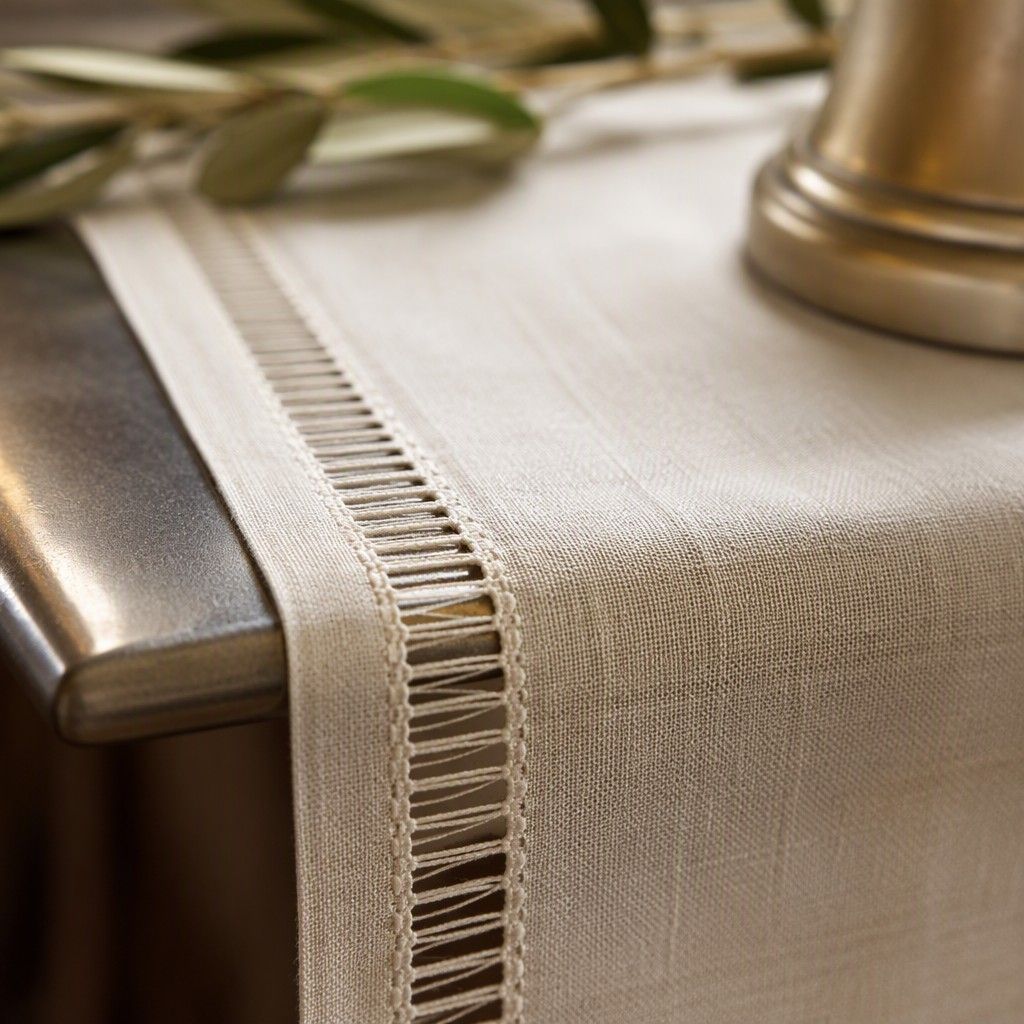
To these come the quiet signs: the piping that retraces the edge of an armchair, and the monogram on napkin and bed linen, embroidered in St. Gallen. In Vienna this language needs no explaining — one only has to master it.
The substance
Respect for what exists
Historic furniture and listed rooms tolerate no experiments. Our answer is the loose cover: after measuring and toile fitting it is drawn over the furniture, reversible in every respect. Nothing is nailed, nothing glued — the Biedermeier armchair beneath remains what it is.
The same principle applies to the windows: curtain tracks and poles are set so that stucco and reveal remain untouched. The page Process describes how we proceed in detail; the weaves with origin and care are on the page Materials.
Part of this is patience in the detail: in period buildings no window is like another, and the reveals are rarely square. We take up every opening individually, make every panel individually and hang at the final fitting until the fall is right — at three metres of height that simply takes its time, and that time is planned in.
The connection
Vienna and the neighbourhood
From Vienna we look after houses across the east of Austria — and many Viennese clients also work with us in Munich or on the Upper Bavarian lakes. Patterns and fabrics lie in the archive; the signature stays the same, from the period apartment in Grinzing to the country house on Tegernsee.
And because Vienna is a city of tables: bespoke table linen is also among our regular commissions — cloths for long tables in Biedermeier salons, runners and napkins, on request with the family monogram from the embroidery in St. Gallen — stitched by hand, with threads that match the weave.
Questions and answers
Frequently asked questions
Do you make curtains for very tall period windows?
Yes. Viennese period buildings often have windows over three metres, plus stucco, casement windows and deep reveals. We measure at the window, calculate the fall and make panels that hang cleanly from the crown to the floor — on request double-layered with a light sheer and a dense panel.
Do you intervene in the substance of historic furniture?
No. We work with loose covers: they are drawn over the furniture and closed with a bow or button placket — without sewing or gluing on the original. The piece remains unchanged and can stand bare again at any time.
Which details suit classic Viennese interiors?
An inverted pleat at the hem of the floor-length slipcover, drawn-thread hem on table linen, narrow piping and ribbons in muted tones. These forms come from the same era as the houses — they complement the existing interior instead of overlaying it.
How often are you in Vienna?
We travel to Vienna several times a year and bundle measuring, toile fitting and final fitting. Between appointments we coordinate everything in writing; the Textile Passport documents every piece.
Do you also work for heritage protection bodies or foundations?
Yes, on request. We make textile additions for listed interiors — in coordination with the responsible authorities and exclusively with reversible, substance-preserving methods.